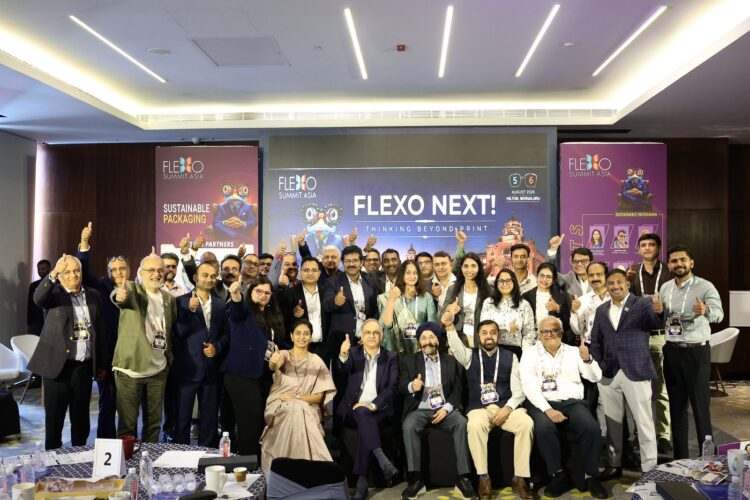
Flexo Summit Asia 2026 brought the brand perspective to the forefront with an exclusive brand owners-only session on sustainability, creating a closed-door platform for candid conversations around the priorities, challenges and practical realities shaping sustainable packaging decisions.
Held during the second day of the summit at Hilton Bengaluru, the exclusive session brought together experts from across the printing and packaging value chain to address the changing regulatory, consumer and packaging challenges that brands are navigating today.
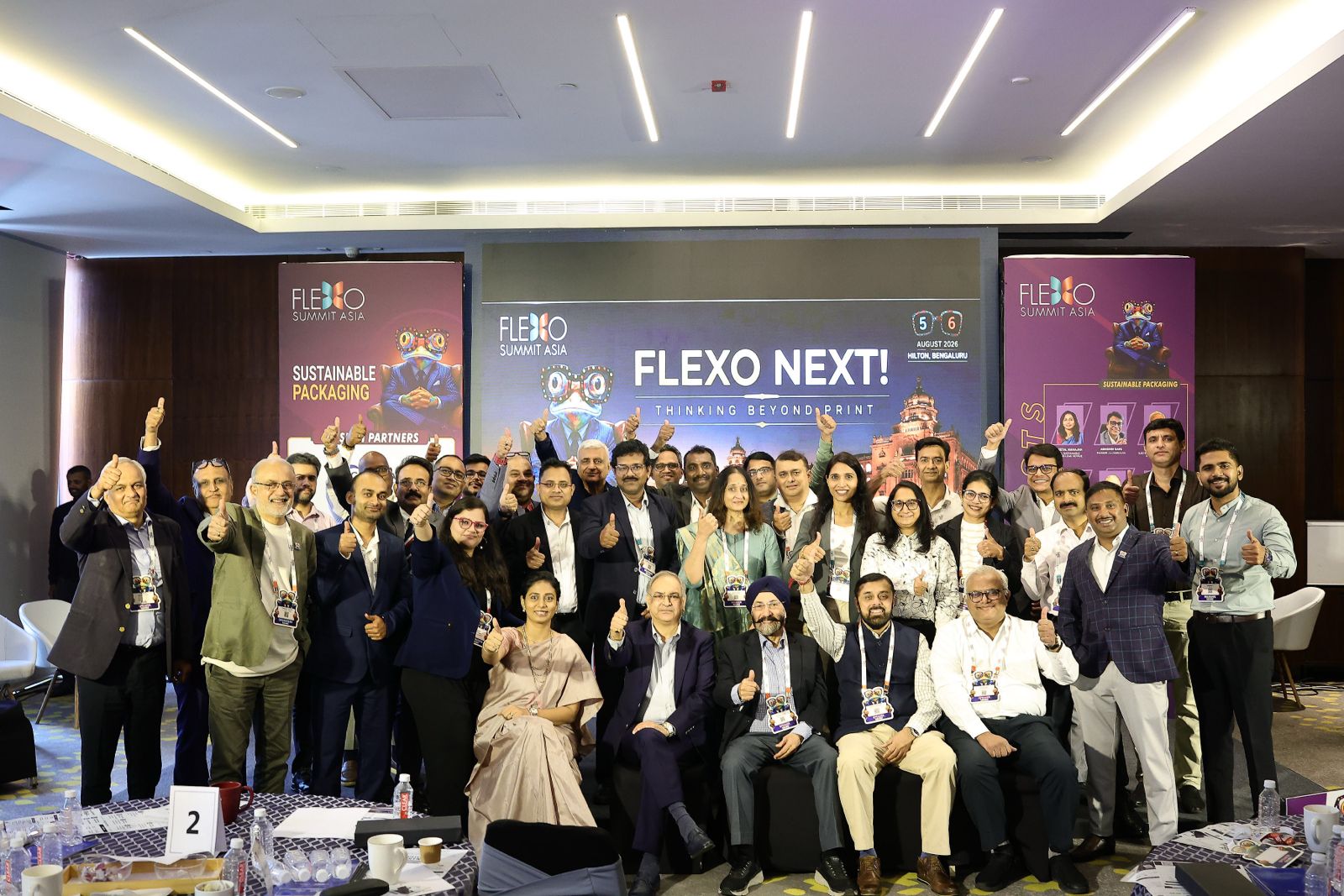
The sessions saw participation from companies including Amway, Britannia Industries, Dabur India, ITC, Kenvue India, Kimberly-Clark India, Diageo India, Emami, Reliance Retail, Reliance Consumer Products, Lotus Herbals, Plum, Jyothy Labs, Kellanova, Himalaya Wellness, Colorbar, Orkla India, Biocon, Glenmark, HealthKart and Kapiva, among others.
A Closed-Door Conversation on Packaging Reality
Rather than approaching sustainability as a broad ambition, the programme focused on specific issues influencing packaging decisions and compliance today.
The discussions covered “Sustainable Packaging – The Consumer’s vs Brand Owner’s Viewpoint,” “Strategies for Achieving EPR Compliance,” “Flexible Packaging Under the Spotlight,” “Designing Labels for Recycling,” and “Your Essential PPWR Compliance Checklist.”
A key highlight panel, “Flexible Packaging Under the Spotlight,” examined one of packaging’s most complex sustainability challenges. Flexible packaging offers clear benefits in material efficiency, protection, shelf life and logistics, but multilayer structures and mixed materials can complicate collection, sorting and recycling. The discussion went beyond whether it is sustainable, focusing on how structures can evolve, where recyclability can be improved, and how sustainability must be balanced with performance, cost and commercial viability. It brought together perspectives across the value chain to define what practical progress can look like.
The session on “Designing Labels for Recycling” focused on a component that strongly affects overall pack recyclability. It explored how label materials, adhesives, inks, decoration and label–container compatibility must be considered at the design stage, not later. It reinforced that labels are not just branding elements, but part of the packaging system, where design choices can either support or hinder sorting and recycling.
Jupiter Laminators, Vinsak, UPM Adhesive Materials, and Mudrika Labels were integral to bringing this sustainability-focused dialogue to the industry, representing different but interconnected parts of the packaging value chain. Their association with the sustainability programme reflected exactly what the conversations called for: collaboration across substrates, printing, labels, adhesives, converting and technology to move sustainability from targets and commitments towards solutions that can work in the real world.
The programme highlighted that no single material, technology or stakeholder can solve the packaging sustainability challenge in isolation. As EPR frameworks, recycling requirements and international regulations such as PPWR continue to reshape packaging decisions, closer interaction between brand owners, converters, material suppliers, label specialists and technology providers will become increasingly important.
The sustainability programme formed an important part of “FLEXO NEXT – Thinking Beyond Print,” the theme of Flexo Summit Asia 2026, extending the conversation beyond print production to the regulatory, environmental and market forces influencing the future of packaging.